
Every order routed. Every decision explained.
Crifel is the decision layer for fulfilment operations — it turns static planning into real-time decisions that can be explained.
6
Coordinated steps in every decision — capture to measure
18+
Years on the warehouse floor behind the founding team
Orders arrive in seconds. Making the right call before the SLA slips is the real challenge.
Routes are planned the day before, while conditions on the ground change by the hour.
Inventory uncertainty and manual allocation slow down every decision.
When systems operate in isolation, planning stays static and no one can reconstruct why a call was made.
Crifel turns every order into a coordinated decision
A single decision layer orchestrates the entire operation — and records every decision it makes.
1. Capture
No order stays isolated. Spare parts, service orders, plant & site demand and store replenishment all enter through one door.
2. Normalise
Translates multi-channel inputs into a single common schema, ready to be compared and ranked.
3. Decide
Selects the right workflow according to business rules — inventory, SLA, capacity, location and cost.
4. Execute
Coordinates pick, pack, sort & ship as one instruction to the right point.
5. Monitor
Detects risks and re-decides in real time — before the SLA breach.
6. Measure
Compares outcomes against agreed KPIs, closing the loop for the next decision.
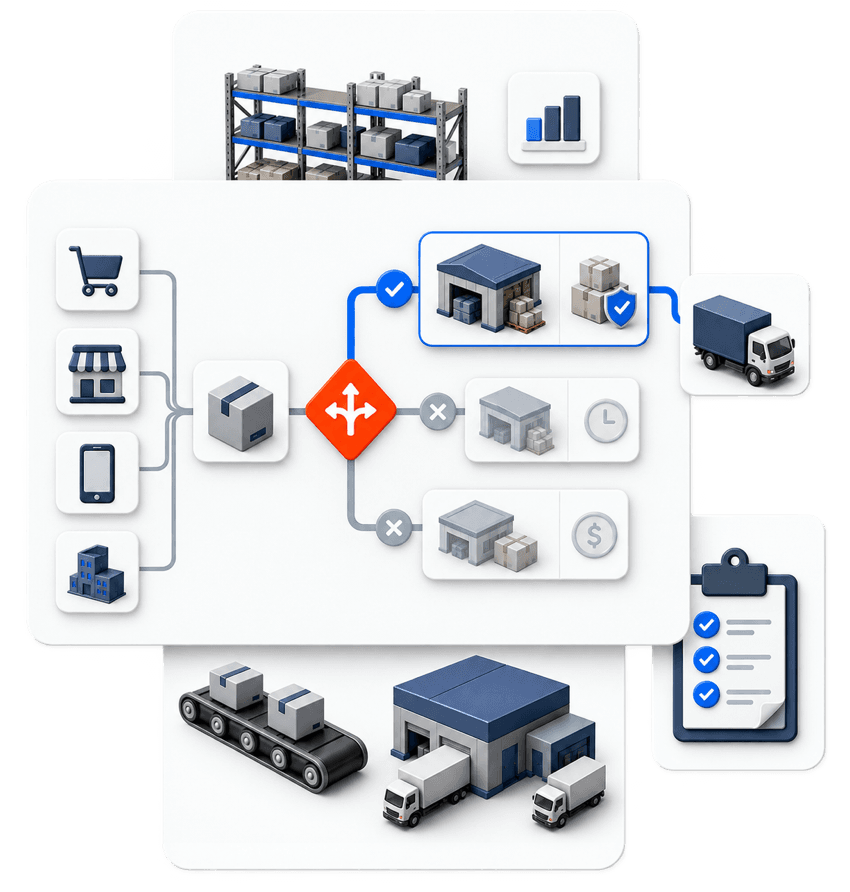
Every order is allocated to the hub that can best fulfil it
Spare parts orders, service orders, plant & site demand and store replenishment all become one unified order — received, validated, normalised and flagged, ready to be allocated.
One entry point for every channel
One rule decides where each order goes — plant stock, central warehouse, supplier direct or cross-dock — ranked by inventory, SLA, capacity, location and cost.
Every decision leaves a record of why it was made
Transactional systems log what happened. Crifel records the rule, the variables and the alternatives it ruled out.
Reconstruct
Any decision can be replayed months later, with the rule version that produced it.
Improve
Rules are compared against the outcomes they produced.
Train
The record is the dataset on which predictive models are later trained.
Carrier, route and window are chosen at dispatch time — not the day before
Picking, delay detection and packing run under real-time status and SLA control, so routing rules select the best option in cost, service level, availability and delivery window before the order ships.
Problems are managed before they become critical
Detect, alert, intervene and resolve — an anomalous status is caught inside the same flow, with a full decision trail.
Delivery, evidence and closure — including returns and replacements when applicable — share the same traceability as the rest of the order cycle.
The product is new. The operational knowledge is not.
Product Ready
Fully developed and demonstrable end to end. Pre-production, ready for its first industrial deployment.
Applied Experience
Built on operational experience from after-sales and device lifecycle logistics delivered for Brightcell and Likewize.
AI-Native Engineering
Spec-driven development: our engineers write the specification, and AI builds and tests against it. A new carrier or ERP connector ships in days, not quarters.
Other systems track what happened. Crifel explains why.
Three alternatives exist today. Each solves part of the problem — and none records the decision.
Enterprise OMS & cloud platforms
Configurable, but opaque — a transactional log only, with 3 to 18 months to a first result. Built for retail scale, not daily-changing industrial operations.
ERP + spreadsheets
Decision logic lives in people's heads. Immediate, but not repeatable — and nothing about the decision is ever recorded.
Crifel is built for industrial operations where conditions change daily and every decision has to be explained — explicit, versioned decision logic, fit for a scoped pilot with agreed KPIs.
Auditable AI that learns from itself
That record is the training set — so the models are yours, not a generic pre-trained black box. Each model becomes available as the operation accumulates its own decision history, starting with the first weeks of the pilot.
Fulfilment Risk Prediction
Anticipates which orders are likely to miss their SLA.
Anomaly Detection
Flags unusual order or carrier behaviour as it happens.
Carrier Recommendation
Suggests the best carrier for each shipment, learned from outcomes.
Cost vs SLA Optimisation
Balances cost and service level on every allocation decision.
One decision layer. One real flow.
Scoped, with a real integration and comparable results — validated on one real flow, with KPIs agreed before we start.
Weeks
To first result on a scoped flow — not months
1
Platform, one integration, one scoped pilot
~4h
A week from your operations owner is all the pilot needs
One entry point for every order channel
Spare parts, service, plant demand, store replenishment and ERP orders all become one unified order.
Spare Parts
Service Orders
Plant & Site Demand
Store Replenishment
ERP
Built to plug into the systems you already run
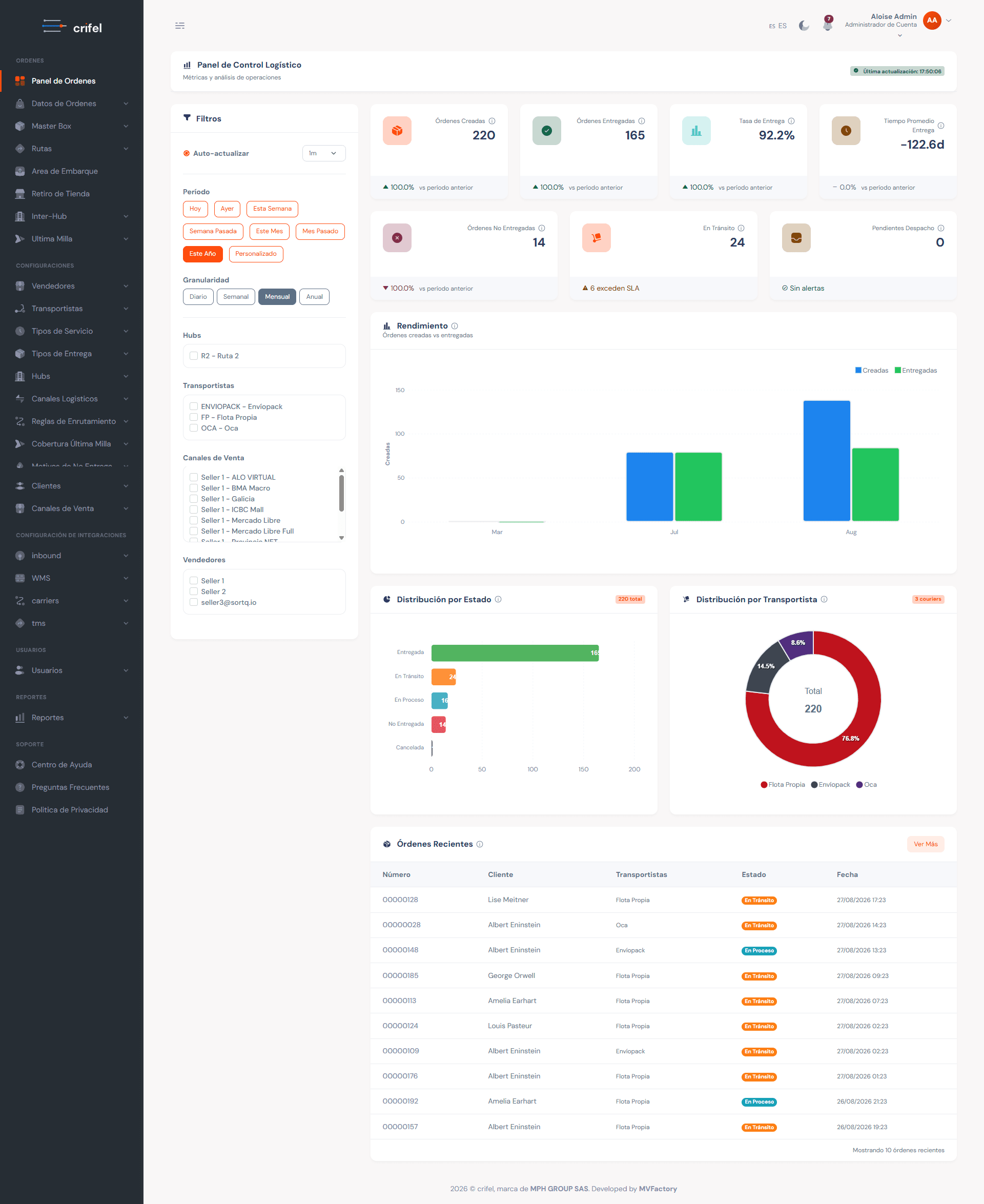
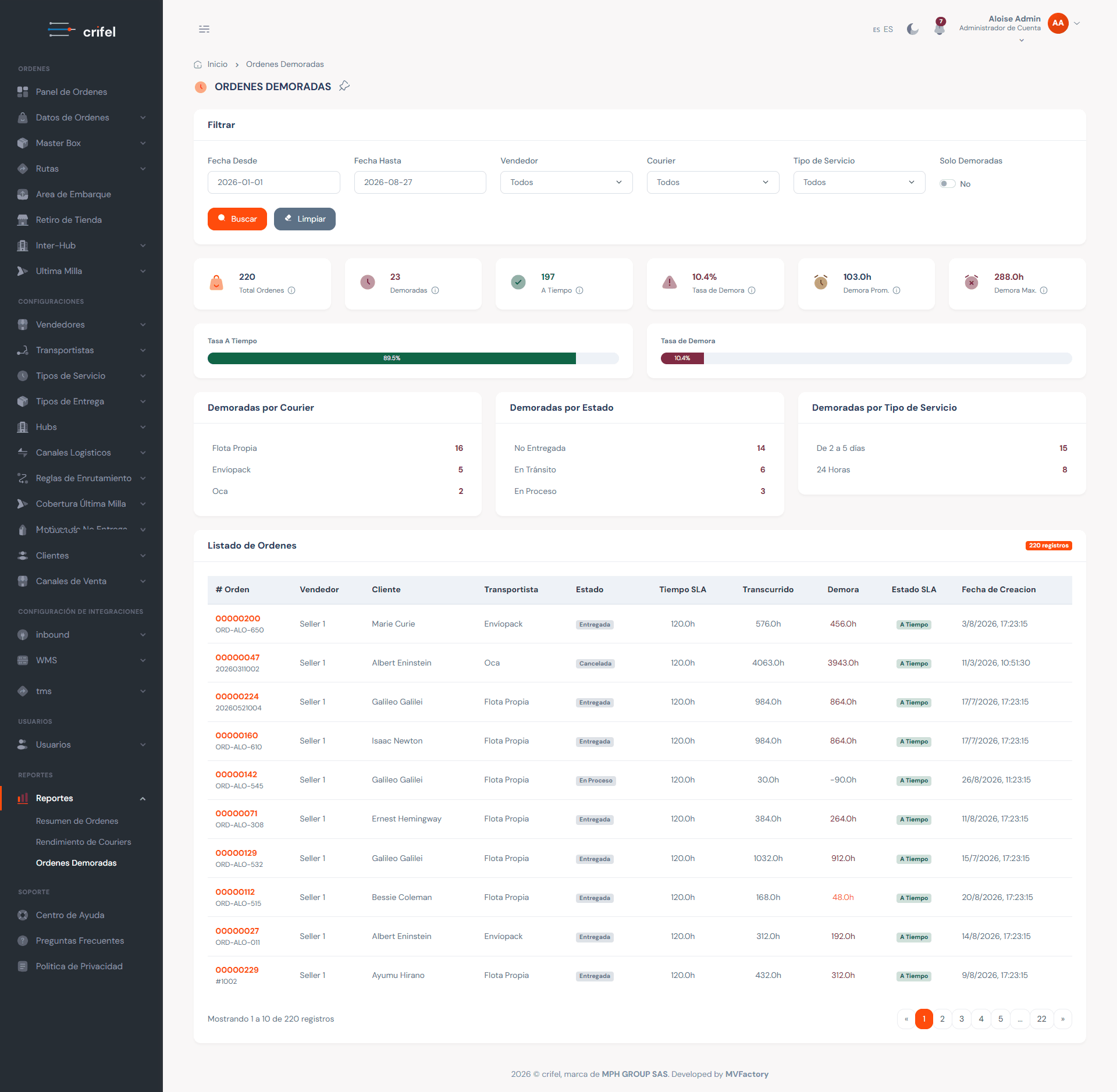
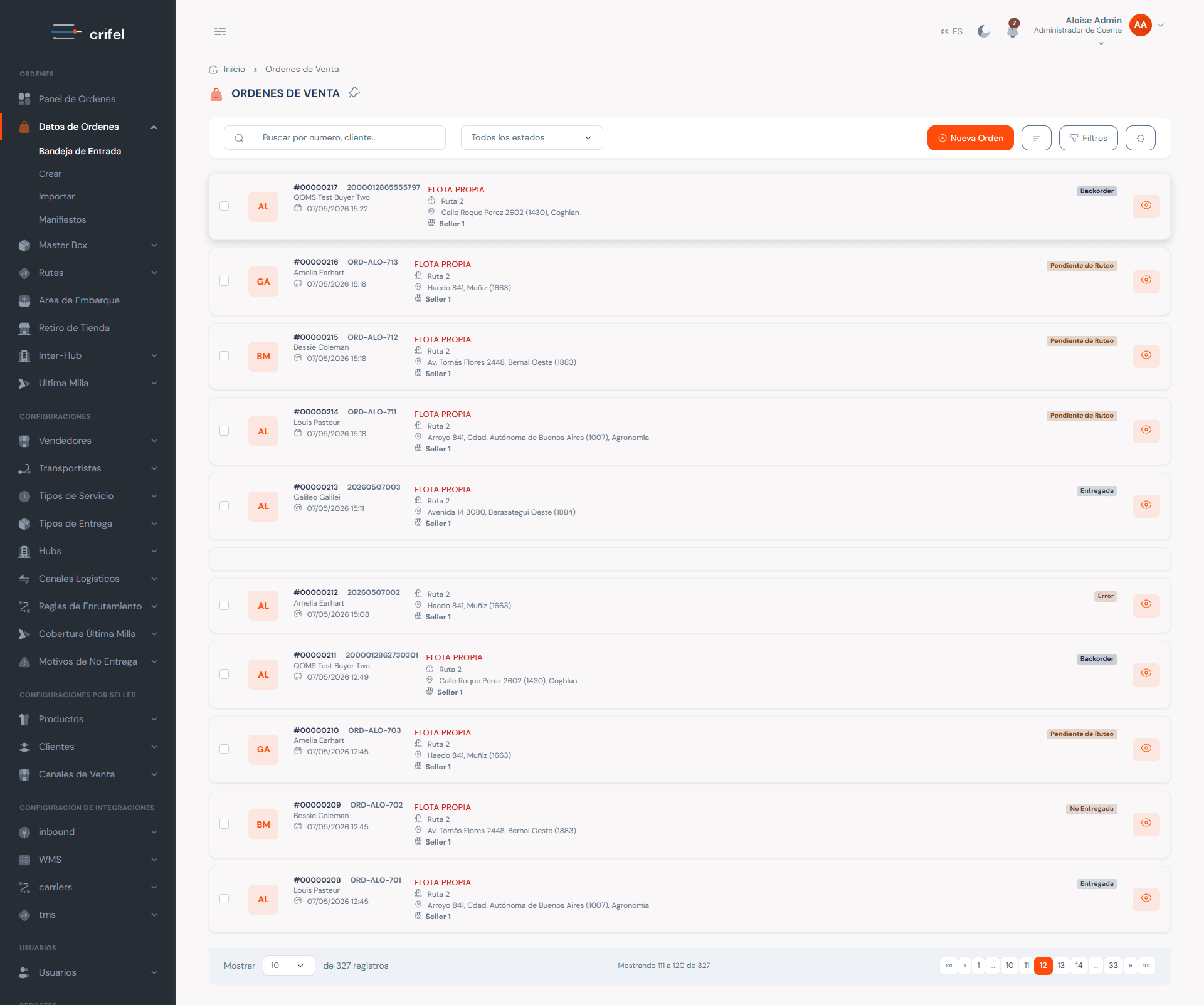
A closer look at the operating console
Screens from the pre-production build — the same product behind every screenshot on this page.
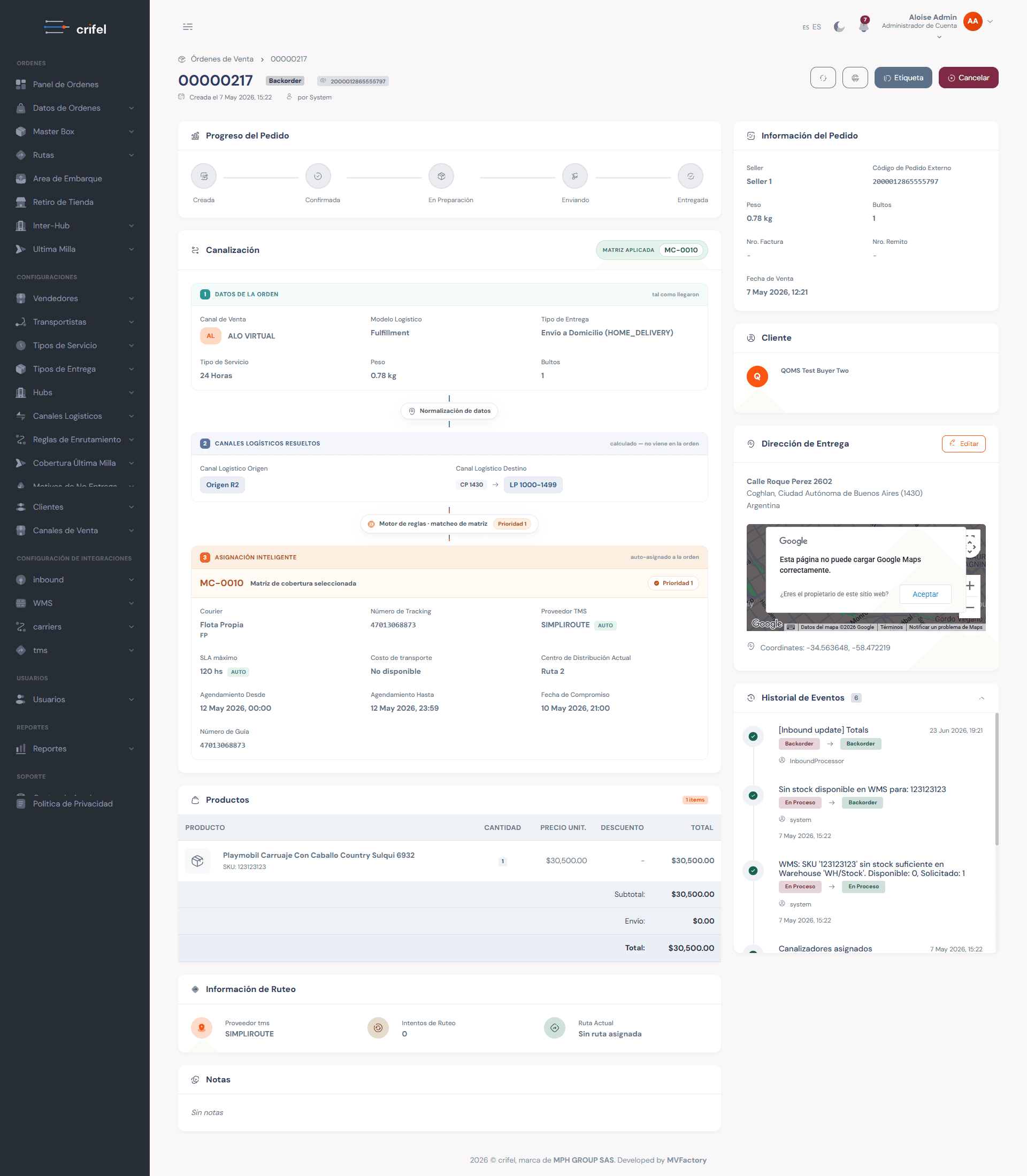
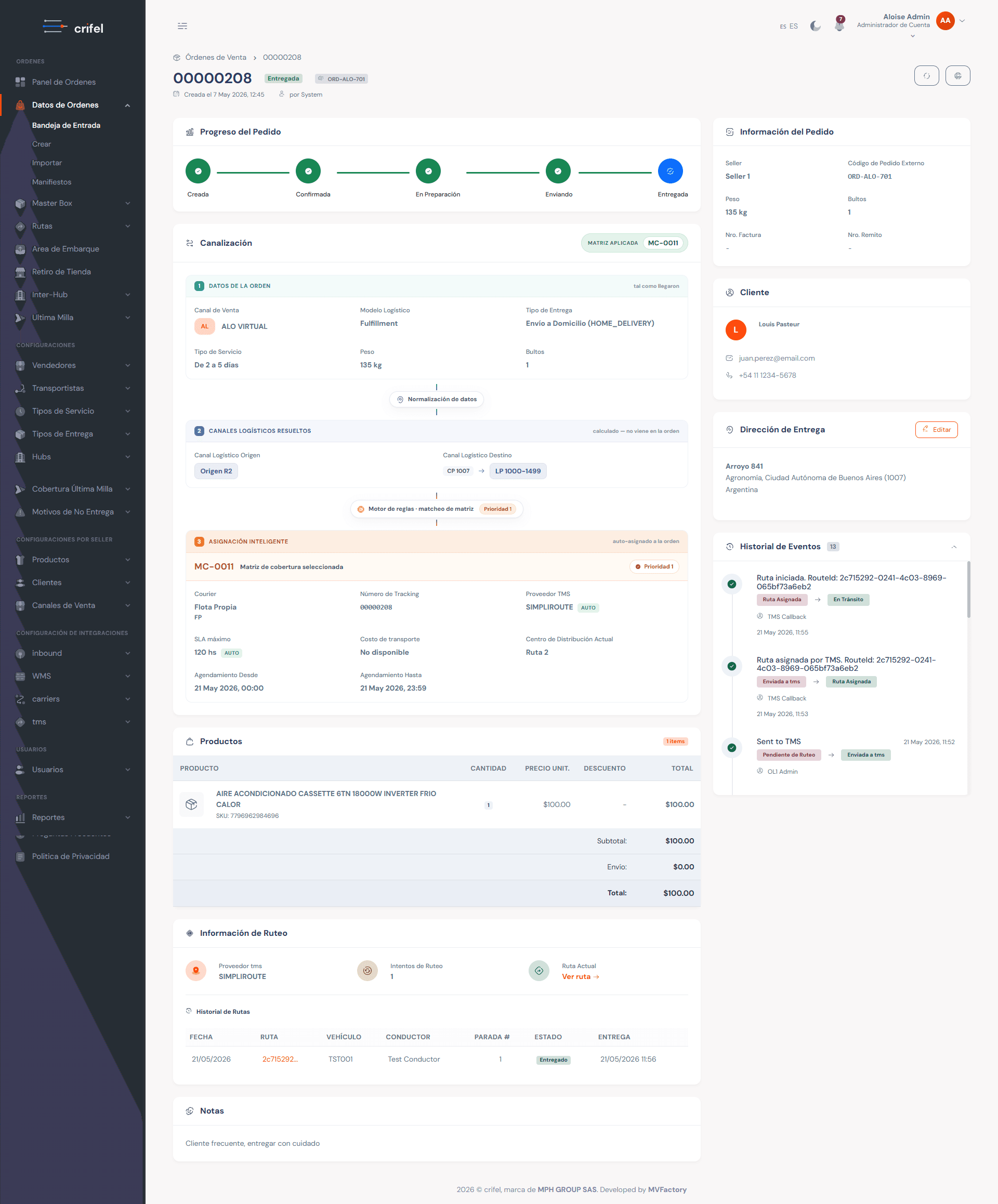
Order Detail
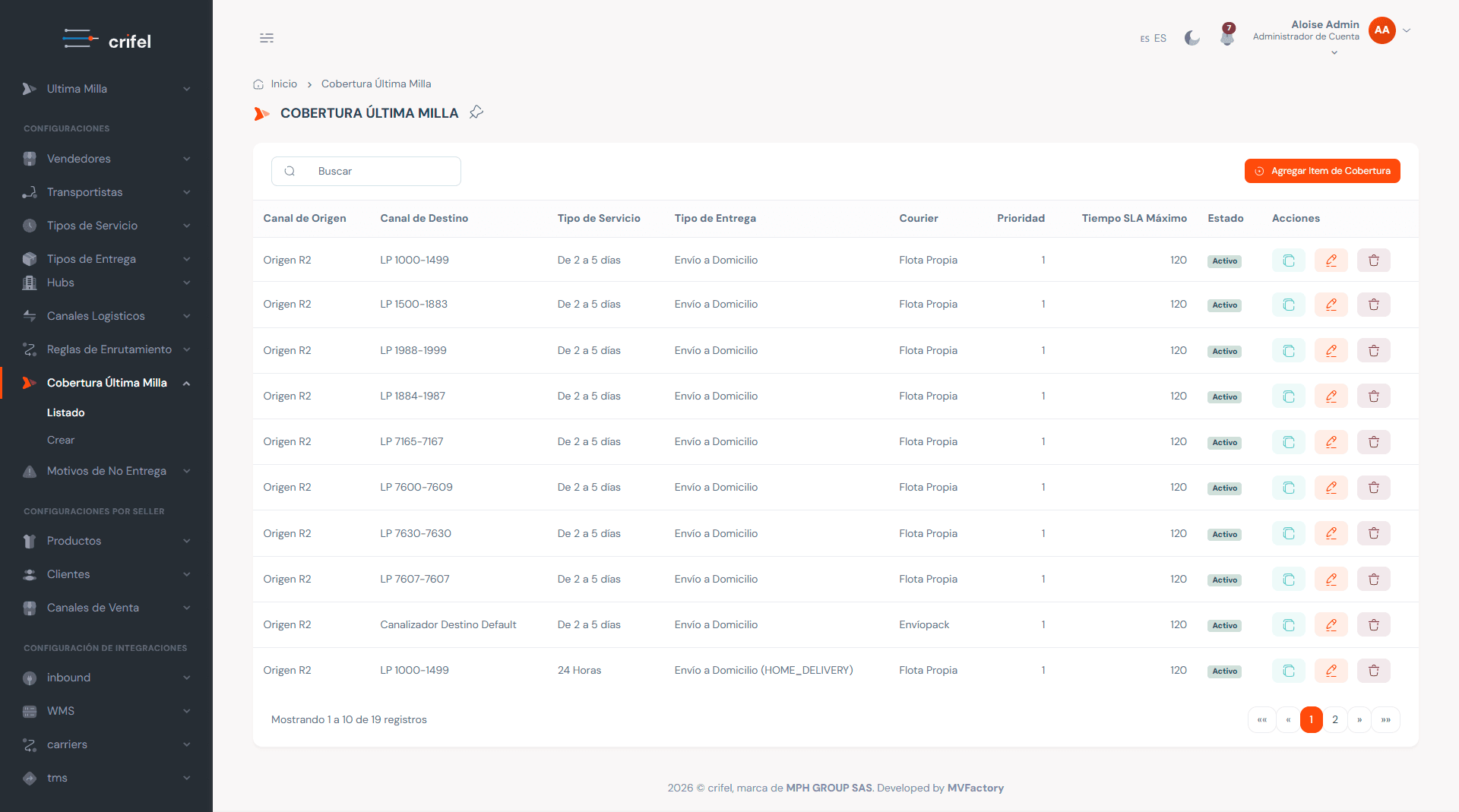
Every allocation, carrier and status change, in one place.
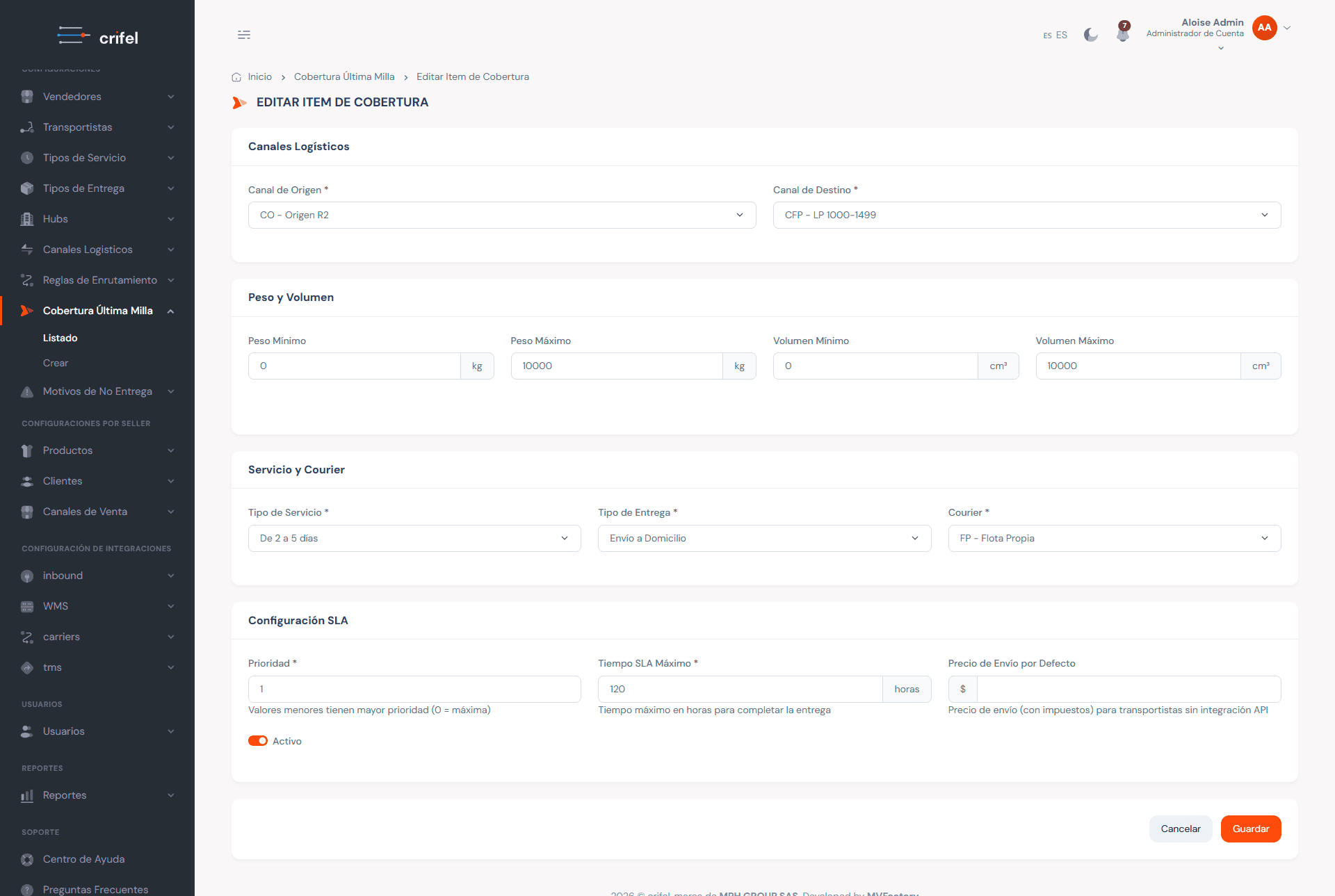
Coverage Matrix Detail
Which carrier serves which zone, and at what service level.
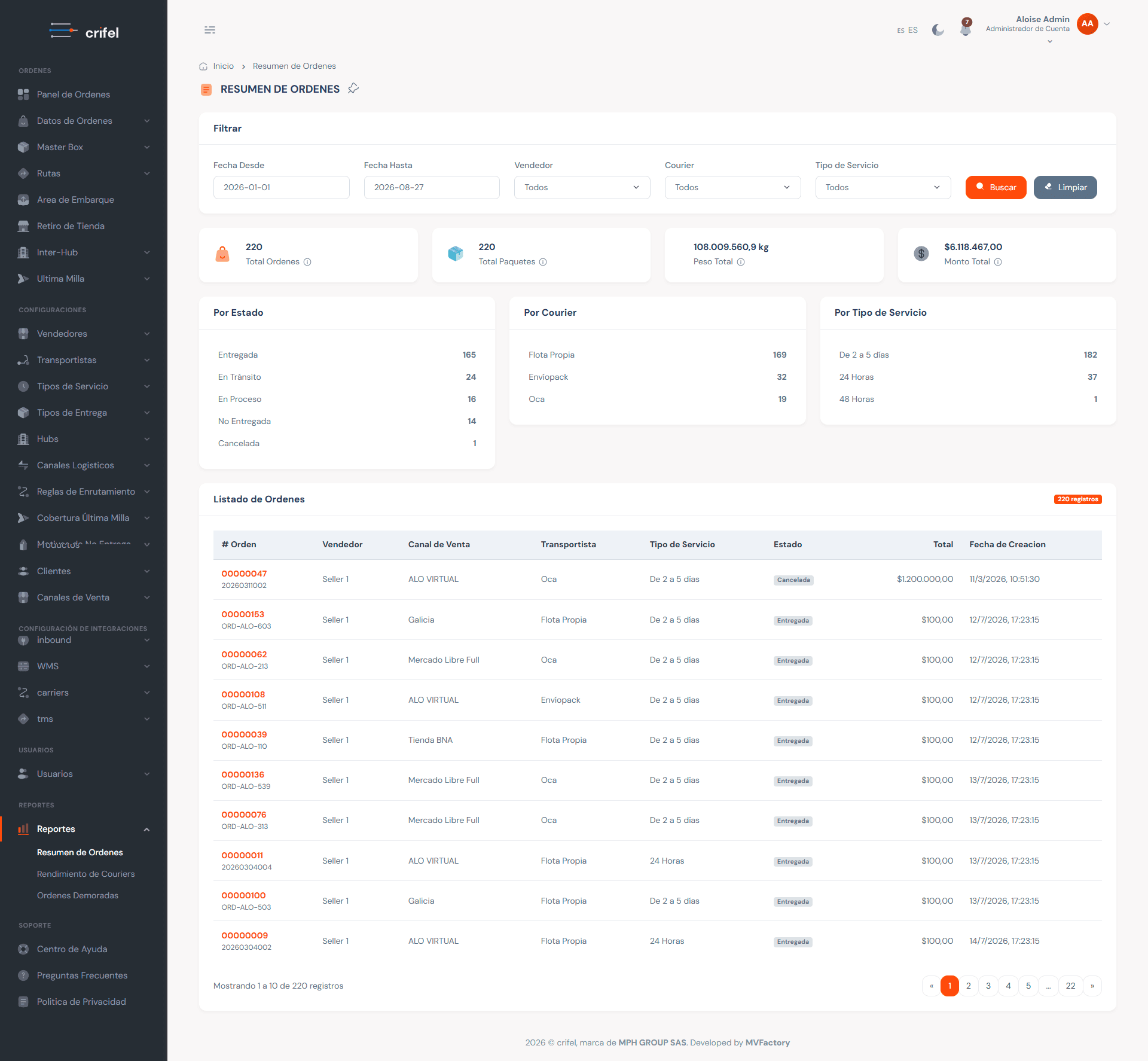
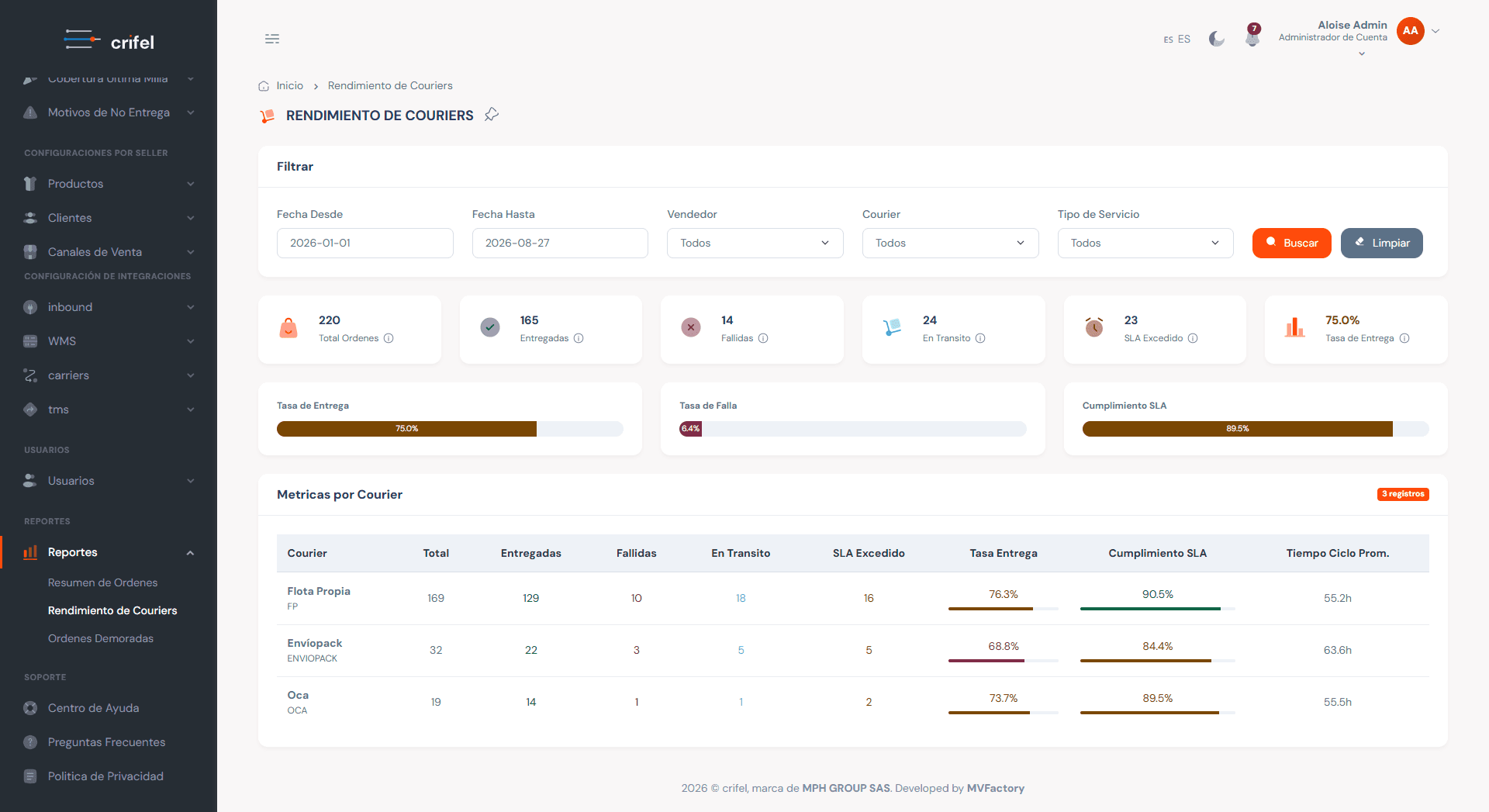
Orders Summary Report
A rollup view for the operations owner running the pilot.
Six people. Eighteen years on the warehouse floor.
Crifel is not a new team looking for a product. It is a product that outgrew the company that built it.
Meet the team →Questions & Answers
Everything you need to know before booking a call.
1. What is Crifel?
The decision layer for fulfilment operations. It captures every order, normalises it into a common schema, decides the right workflow against live rules, coordinates execution, monitors for risk in real time, and measures the outcome — recording why each decision was made.
2. What is a "decision record"?
For every order, Crifel stores the rule applied, the variables at decision time, the alternatives it ruled out and the outcome selected — so any decision can be reconstructed, improved and used to train predictive models.
3. How is this different from our ERP or OMS?
Enterprise OMS suites and cloud platforms keep a transactional log of what happened. ERP and spreadsheets keep the logic in people's heads.
Crifel is the only one of the four that keeps an explicit, versioned decision record — rule, variables and alternatives ruled out.
4. What do you need from us to run a pilot?
Read access to one order source, one inventory source, one carrier or fleet contact, and one operations owner at roughly 4 hours a week. Each KPI is measured against a baseline captured before go-live.
5. Does this cover transport routing, supply chain planning, or both?
Both, on the same platform. Carrier, route and delivery window are decided at dispatch time against live cost, service level, availability and SLA — while every allocation and fulfilment decision is recorded with its rule, variables and alternatives ruled out, the dataset a predictive model needs to be trained on your operation.
6. What happens after the pilot?
We compare the agreed KPIs — automation rate, processing time, SLA compliance, errors, cost per order and time to resolution — against the baseline, and build the case for scale-up together.
Have any questions? Get in Touch